Could a single outdated circuit breaker be the only thing standing between you and a successful Manhattan co-op closing? You’ve likely spent months preparing for this transition, yet the fear of a board rejection due to ancient wiring or missing DOB filings remains a major stressor. Securing a licensed electrician for co-op inspection manhattan is the most critical step to ensure your unit complies with the 2025 NYC Electrical Code updates that became mandatory on December 21, 2025.
This guide provides you with a definitive 2026 compliance checklist to protect your investment, avoid civil penalties that now reach up to $15,000 for unpermitted work, and help you obtain the load letter your board requires. We’ll examine the impact of the 2020 NEC standards on your apartment’s safety and explain how to navigate the new DOB NOW portal requirements. By the end, you’ll have a clear path to passing your inspection the first time and meeting the strict standards of New York’s regulatory environment.
Key Takeaways
- Understand the legal distinction between a general home inspector and the NYC Licensed Master Electrician required to satisfy strict co-op board mandates.
- Identify high-risk electrical components like Federal Pacific panels and deteriorated BX cabling that frequently trigger board rejections in pre-war buildings.
- Learn how hiring a licensed electrician for co-op inspection manhattan ensures your unit meets the 2025 NYC Electrical Code updates and secures a valid load letter.
- Discover the efficient process for “curing” existing DOB violations and managing digital filings through the DOB NOW portal to prevent closing delays.
- Protect your financial investment by uncovering hidden hazards like overloaded neutral wires before they become fire safety risks or costly liabilities.
Why Manhattan Co-ops Require a Licensed Master Electrician
A Manhattan co-op purchase is more than a simple real estate transaction; it’s an entry into a shared, complex infrastructure. While a general home inspector evaluates the overall condition of a unit, they lack the legal authority to certify electrical systems for a board. You must hire a licensed electrician for co-op inspection manhattan to satisfy the specific requirements of management companies and their engineers. These boards are notoriously strict because the building’s main risers often date back several decades. If one unit overloads the system, the entire line could fail, leading to building-wide outages and expensive emergency repairs.
The primary document you need for board approval is a “Load Letter.” This professional assessment calculates the total electrical demand of your appliances and lighting against the apartment’s available amperage. Boards use this data to decide if you can legally install high-draw items like induction ranges or central air conditioning. Without a signature from a professional recognized by the NYC Department of Buildings (DOB), your renovation plans will likely stall before they even begin.
The Board Approval Process and Electrical Compliance
Management companies act as gatekeepers for building safety. They require a licensed electrician NYC to review your alteration agreement before any work starts. This review ensures your project won’t compromise the building’s 2025 NYC Electrical Code compliance. Many owners assume their wiring is “grandfathered” in, but this protection often vanishes during a sale or major renovation. Modern standards, specifically those updated on December 21, 2025, require specific safety upgrades like AFCI protection that older systems simply don’t have. Safety isn’t optional in a high-density environment.
Insurance and Liability: Protecting the Building
Safety and legality are the twin pillars of co-op living. Manhattan boards typically mandate that any contractor entering the building carries at least $1 million in general liability insurance, along with workers’ compensation and umbrella coverage. Using an unlicensed handyman for apartment work is a significant risk that can lead to immediate work-stop orders and heavy civil penalties. An official inspection report from a licensed electrician for co-op inspection manhattan provides a paper trail that protects you. It proves you’ve done your due diligence and that the work meets NEC standards. This documentation is vital for mitigating risk and ensuring your homeowner’s insurance remains valid in the event of a future claim.
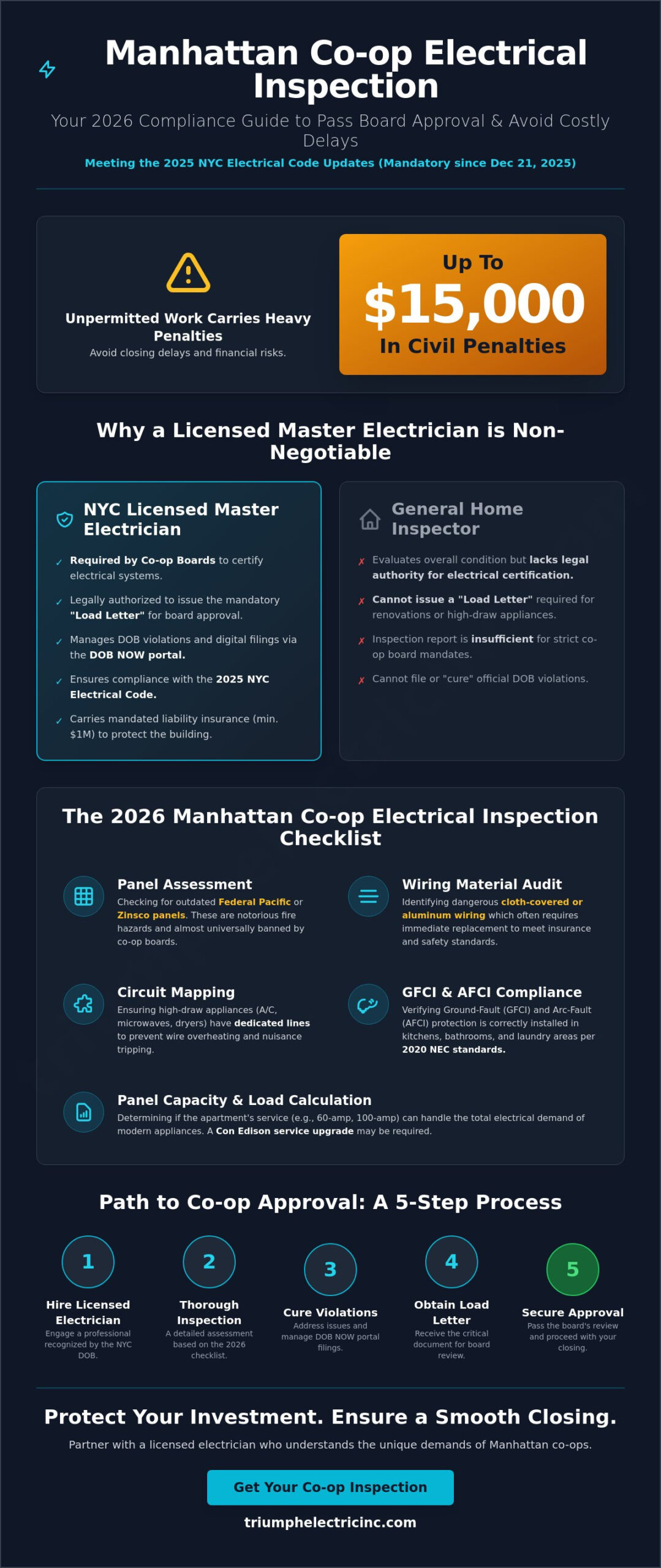
The 2026 Manhattan Co-op Electrical Inspection Checklist
Executing a thorough 2026 checklist requires a licensed electrician for co-op inspection manhattan who understands the nuances of the 2025 NYC Electrical Code. This code, which took full effect on December 21, 2025, mandates stricter safety protocols than ever before. When you hire a licensed electrician for co-op inspection manhattan, they focus on several critical safety vectors that commonly cause board rejections or closing delays.
- Panel Assessment: We check for outdated Federal Pacific or Zinsco panels, which are notorious fire hazards and are almost universally banned by Manhattan co-op boards.
- Circuit Mapping: Our team ensures that high-draw appliances like air conditioners, microwaves, and dryers have dedicated lines to prevent nuisance tripping and wire overheating.
- Wiring Material Audit: We identify and flag dangerous cloth-covered or aluminum wiring, which often requires immediate replacement to meet 2026 insurance standards.
- GFCI and AFCI Compliance: We verify that ground-fault and arc-fault protection is installed in kitchens, bathrooms, and near all water sources as required by the 2020 National Electrical Code (NEC).
Panel Capacity and Load Calculations
Determining if your existing 60-amp or 100-amp service can handle modern technology is the cornerstone of a successful inspection. If you’re merging units or adding high-end appliances, you might need a Con Edison service upgrade to accommodate the increased demand. A load calculation for NYC apartment standards is a precise engineering evaluation that determines the total electrical demand of all installed equipment and lighting to ensure it doesn’t exceed the safe operating limits of the building’s distribution system. It’s vital to know When to hire a Licensed Master Electrician to perform these calculations, as the DOB won’t accept filings from unlicensed contractors.
Outlet and Lighting Safety Standards
Testing for proper grounding is essential in pre-war buildings where “bootleg grounds” are a common and dangerous find. We also inspect recessed lighting to ensure it’s IC-rated, meaning it’s safe for direct contact with insulation, which is a key fire safety requirement. Our inspectors check for illegal daisy-chained extension cords or over-tapped circuits that indicate a system is pushed beyond its limits. If your apartment shows these red flags, scheduling a professional review can prevent a violation before the board’s engineer arrives.
Navigating NYC Code Violations and DOB Filings
A professional inspection often reveals more than just physical safety risks; it uncovers legal liabilities that can derail a real estate transaction. When you hire a licensed electrician for co-op inspection manhattan, we cross-reference the apartment’s current wiring against official records to identify open permits or unfiled work. It’s critical to distinguish between a “Board violation” and a “City violation.” A Board violation involves failing to meet specific building-wide standards, such as using an unapproved panel brand. A City violation is a formal notice from the Department of Buildings (DOB) indicating that work was performed without a permit or fails to meet the NYC Electrical Code.
Clearing these hurdles is a process known as “curing” the violation. Since December 21, 2025, the penalties for performing electrical work without a permit in Manhattan multi-family buildings have become severe. Civil penalties now range from a minimum of $6,000 to a maximum of $15,000. Because of these high stakes, NYC electrical violation removal must be handled by a licensed firm capable of filing the correct paperwork and performing code-compliant repairs. We ensure all equipment meets the 2020 NEC standards to prevent future legal issues during the next sale.
The Master Electrician’s Role in DOB Paperwork
Triumph Electrical handles the heavy administrative burden required by the City. We file the necessary Electrical Work (ELV) applications through the DOB NOW: Build portal, which is now the mandatory platform for all Manhattan filings. Once repairs are finished, we secure the official Certificate of Electrical Inspection. This document is the only proof the management office will accept to close out an alteration agreement. Our “New York’s Brightest” team manages the entire timeline, from the initial filing to the final sign-off, so you don’t have to deal with the DOB bureaucracy.
Pre-Closing Inspection Strategies for Buyers
Smart buyers use an inspection report as a powerful negotiation tool. If a licensed electrician for co-op inspection manhattan identifies outdated cloth wiring or a lack of AFCI protection, you can request a price credit or insist the seller clears the violations before the closing date. We provide detailed repair estimates that give your attorney concrete data for the contract phase. This due diligence ensures the seller clears all open permits and resolves “creative” DIY renovations before the title transfers. Don’t inherit a previous owner’s electrical debt; verify the system’s integrity before you sign.
Common Red Flags in Pre-War Manhattan Apartments
Manhattan’s pre-war apartment inventory is legendary for its architectural detail, yet the infrastructure behind the plaster often tells a different story. A licensed electrician for co-op inspection manhattan is trained to identify the “creative” wiring solutions previous owners implemented decades ago. One of the most prevalent issues we encounter is BX cable deterioration. While the outer steel armor remains intact, the internal rubber insulation becomes brittle and flakes away over time, leaving bare copper exposed inside the metal sheath. This creates an intermittent short circuit that is a leading cause of electrical fires in older buildings.
We also frequently find overloaded neutral wires, which are a common byproduct of DIY renovations. When multiple circuits share a single neutral wire, that wire can carry more current than it’s designed to handle. This doesn’t trip the circuit breaker but generates extreme heat that can melt insulation inside the walls. Additionally, illegal sub-panels tucked away in closets or bathrooms are a major red flag. These installations rarely meet the 36-inch clearance requirements mandated by the NYC Electrical Code and often lack proper venting or accessibility.
Identifying Hazardous Wiring Materials
Cloth-insulated wiring is a primary target during our inspections because the organic fibers degrade and lose their insulating properties. Boards often demand the full removal of these materials before approving a sale or renovation. We also use specialized testers to identify “bootleg grounds.” This is a deceptive practice where a jumper wire is connected between the neutral and ground screws on an outlet to trick simple plug-in testers into showing a grounded circuit. Ungrounded circuits in pre-war apartments lack a dedicated path for fault current, significantly increasing the risk of electric shock and damage to sensitive electronics. If your pre-war unit hasn’t been rewired in the last 30 years, it’s time to schedule a professional troubleshooting session to verify your safety.
The Problem with “Renovated” Kitchens
A kitchen that looks modern isn’t necessarily code-compliant. We often see high-end induction ranges and professional-grade refrigerators installed on old circuits that can’t handle the load. Modern standards require at least two 20-amp small appliance branch circuits to serve the countertop area. If your renovated kitchen lacks these dedicated lines, you’ll likely experience frequent breaker trips when using a toaster and coffee maker simultaneously. Triumph ensures your kitchen renovation meets 2026 NEC standards by installing dedicated circuit breaker panels and ensuring all wiring is sized correctly for today’s high-demand lifestyle.
Triumph Electrical: Your Partner for Manhattan Co-op Approval
Triumph Electrical Contracting Inc. functions as your strategic partner in the high-stakes Manhattan real estate market. We understand that a failed inspection can delay a multi-million dollar closing or halt a high-end renovation. As “New York’s Brightest,” we leverage decades of experience with the city’s most demanding management companies to ensure your unit meets every board requirement. Our team doesn’t just point out problems; we provide the solutions. Whether you need a simple load letter or full-scale electrical violation removal, we handle the project professionally and legally. By hiring a licensed electrician for co-op inspection manhattan, you ensure that every technical hurdle is cleared before your board interview or closing date. We also provide 24/7 emergency support for last-minute closing issues that require immediate professional intervention.
Securing a licensed electrician for co-op inspection manhattan is the only way to navigate the quirks of pre-war buildings and modern board mandates. We’ve seen every possible electrical challenge across the city, but we specialize in the unique vertical infrastructure of Manhattan. This experience allows us to offer our signature promise: passing inspection the first time. We eliminate the anxiety of DOB violations by ensuring all work follows the NYC Electrical Code and NEC standards to the letter. Our goal is to provide peace of mind for shareholders and property managers alike.
The Triumph Process for Co-op Inspections
Our methodical approach starts the moment you call us. We schedule a comprehensive onsite audit of your apartment’s electrical system, from the service panel to the furthest outlet. If your project involves a renovation, we work directly with your architect or general contractor to review alteration agreements and ensure all plans are code-compliant. After the site visit, we deliver a final, board-ready report that includes all necessary load calculations and safety certifications. We believe in transparency, which is why we provide upfront pricing with no hidden Manhattan surprises. You’ll know the exact scope of work and the cost before we ever pull a permit.
Contact a Licensed Master Electrician Today
Don’t let an outdated circuit breaker or an open permit stand in the way of your property goals. Triumph Electrical Contracting Inc. serves all Manhattan neighborhoods, from the historic brownstones of the Upper West Side and Chelsea to the modern glass towers in FiDi and the Upper East Side. We’re ready to provide the professional sign-off your board demands. Our team is disciplined, highly skilled, and committed to the safety of New York’s infrastructure. Schedule your co-op inspection with Triumph Electrical today and experience the no-nonsense service of a veteran Master Electrician.
Secure Your Manhattan Investment and Ensure Compliance
Navigating the specific demands of a Manhattan co-op board requires more than just technical skill; it demands a deep familiarity with the city’s unique regulatory landscape. By following the 2026 checklist, you’ve taken the first step toward securing your property’s future and ensuring it meets the rigorous safety standards of the current compliance cycle. Whether you’re addressing ancient BX cabling or preparing a load letter for a high-end kitchen renovation, the presence of a licensed electrician for co-op inspection manhattan is your best defense against board rejections and costly DOB penalties.
Triumph Electrical Contracting Inc. brings over 10 years of localized experience and the authority of NYC Licensed Master Electrician #12345 to every unit we enter. We don’t just identify hazards; we provide the certified reports and code-compliant solutions that keep Manhattan’s infrastructure running safely. Our team is committed to delivering precision and legitimacy, ensuring your real estate transaction stays on track without hidden surprises.
Secure your Manhattan Co-op approval with a professional inspection from Triumph Electrical Contracting Inc. It’s time to move forward with the confidence that your home is safe, legal, and fully protected.
Frequently Asked Questions
Do I really need a licensed master electrician for a co-op inspection in Manhattan?
Yes, you must hire a licensed electrician for co-op inspection manhattan because building management requires a professional sign-off that general home inspectors cannot provide. Only a Master Electrician has the legal authority to file permits and certify that the unit meets the 2025 NYC Electrical Code. This ensures the building’s infrastructure remains protected and your renovation plans move forward without legal delays.
How much does a typical Manhattan co-op electrical inspection cost?
The average cost to hire an electrician in New York City is approximately $393, with typical project ranges falling between $193 and $629 according to March 2026 data. For a formal co-op inspection, you should expect to pay hourly rates between $110 and $210. These costs reflect the expertise required to navigate Manhattan’s complex regulatory environment and provide the documentation your board demands.
What is a “load letter” and why does my co-op board want one?
A load letter is a certified document that calculates the total amperage your apartment requires compared to the building’s available capacity. Boards demand this because Manhattan’s older electrical risers have limited headroom. If your new appliances exceed the allotted capacity, the board will reject your application to prevent building-wide power failures and potential fire hazards.
Can a failed electrical inspection stop my apartment closing?
A failed inspection can absolutely stop a closing if the contract stipulates the apartment must be delivered free of violations. If a licensed electrician for co-op inspection manhattan discovers unpermitted work, the board may refuse to issue a move-in letter until the issues are cured. Resolving these problems before the final walk-through prevents last-minute legal complications and financial disputes.
How long does it take to clear an electrical violation in NYC?
Clearing a violation typically takes several weeks because it involves performing repairs and scheduling a follow-up inspection through the DOB NOW: Build portal. Minor issues like GFCI updates happen quickly, but major panel replacements require permit filings that depend on the city’s current processing times. Starting this process early is essential for meeting tight real estate closing timelines.
What are the most common electrical code violations found in Manhattan apartments?
Common violations include “bootleg grounds,” double-tapped circuit breakers, and a lack of AFCI protection in living areas. Many apartments also carry “work without a permit” violations from previous owners who performed illegal DIY renovations. Our team identifies these hidden issues to ensure your unit meets the 2020 NEC standards recently adopted by New York City.
Does my co-op board require an inspection for a simple kitchen renovation?
Yes, most Manhattan co-op boards require a professional inspection and a load letter for any kitchen work involving new appliances or lighting. Even a simple change can overload old 15-amp circuits that aren’t designed for modern induction ranges or high-speed microwaves. We verify that your renovation plans include the two mandatory 20-amp small appliance branch circuits required by current code.
What happens if my apartment still has cloth-covered wiring?
Cloth-covered wiring is a significant fire hazard because the organic insulation becomes brittle and flakes away after several decades. Most boards and insurance companies mandate its removal as a condition of sale or renovation. Replacing this ancient wiring with modern code-compliant materials ensures your home meets 2026 safety standards and protects your expensive electronic equipment.