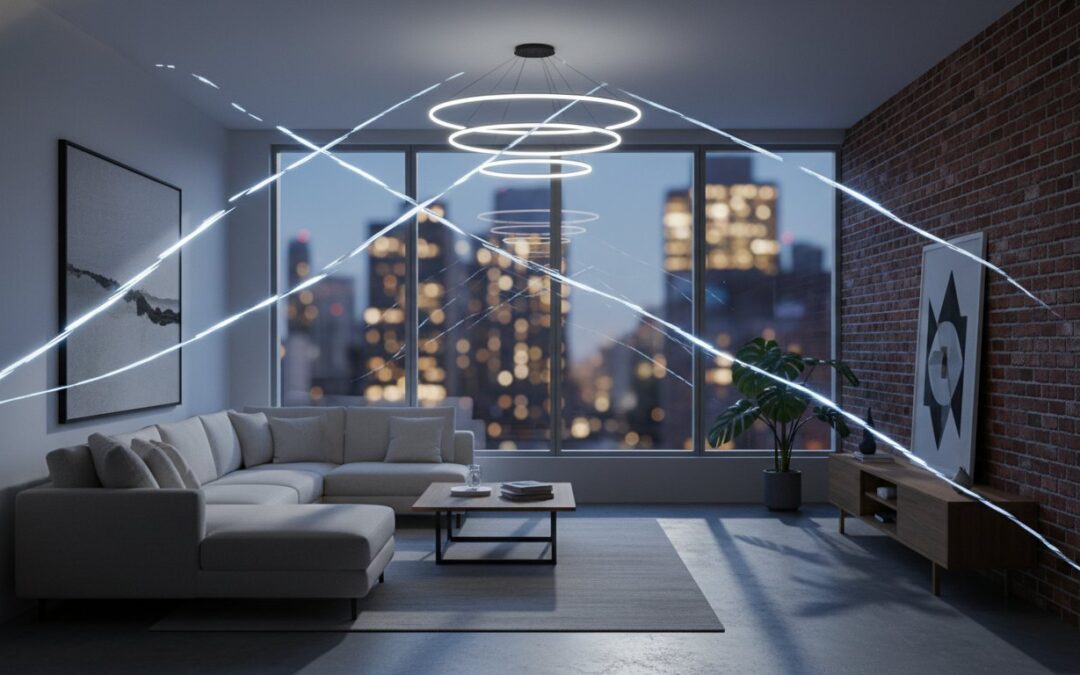
That rhythmic strobe in your living room isn’t just a quirk of “pre-war charm.” It’s a diagnostic signal that your apartment’s electrical system is struggling to keep up with modern demands. Most New Yorkers ignore these fluctuations until a circuit blows or a smell of burning plastic fills the hallway. You’re right to feel uneasy about these signs. With the 2025 New York City Electrical Code now in full effect as of December 21, 2025, the standards for safety are higher than ever. Yet, many aging buildings in Brooklyn and Manhattan still rely on outdated wiring that creates fire risks. Finding a permanent flickering lights in apartment nyc fix requires moving past guesswork and understanding exactly what the law requires of your landlord.
We understand the frustration of dealing with unresponsive management while worrying about your family’s safety. This guide identifies the root causes of your flickering lights and provides the exact steps to resolve them safely under current DOB requirements. You’ll learn how to distinguish between a simple loose bulb and a dangerous service connection issue. We’ll also show you how to use NYC311 data, which saw over 3.4 million service requests in 2024, to force professional repairs that keep your home code-compliant and secure.
Key Takeaways
- Perform a five-step diagnostic to determine if your flickering is isolated to a single fixture or indicates a building-wide safety risk.
- Identify the specific signs of overloaded circuits in pre-war buildings to prevent electrical fires and ensure your wiring handles modern technology safely.
- Learn the exact process for securing a permanent flickering lights in apartment nyc fix through legal channels and 311 reporting if your landlord fails to act within 24 hours.
- Understand the difference between internal wiring failures and external Con Edison grid issues to avoid unnecessary repair costs.
- Explore how licensed professionals use infrared thermal imaging to locate hidden hot spots and bring your apartment into full compliance with the 2025 NYC Electrical Code.
Troubleshooting Flickering Lights: 5 DIY Steps to Take First
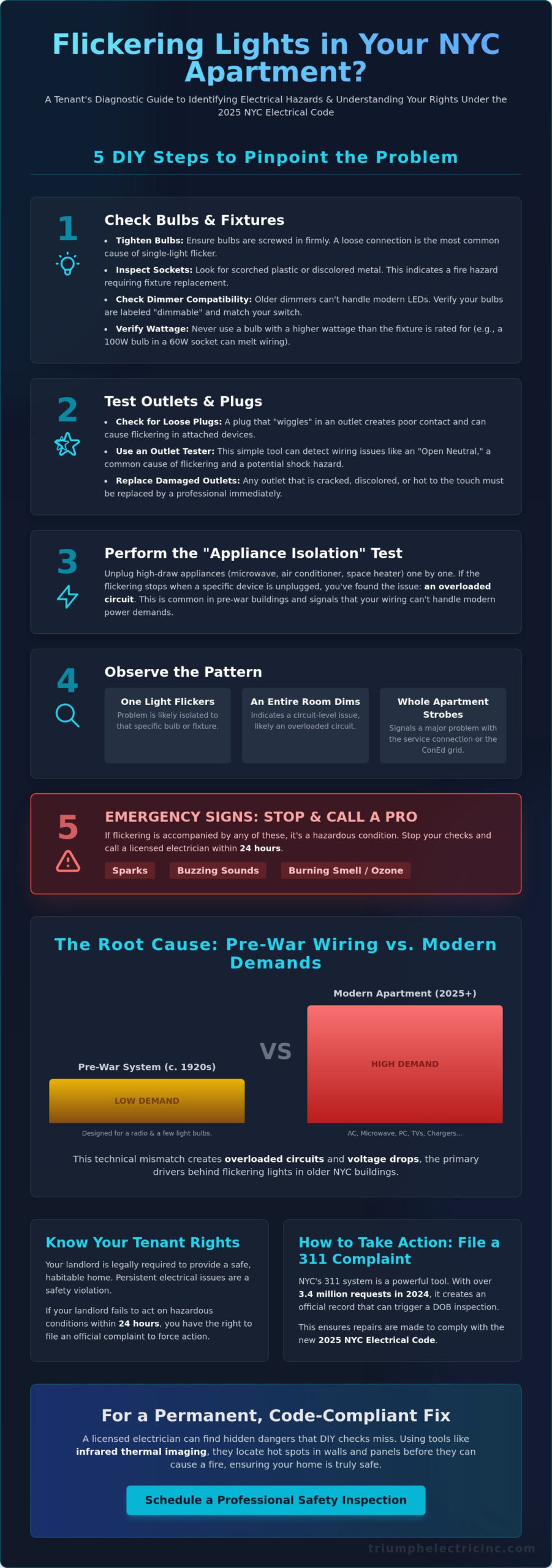
Before you call building management or search for a professional flickering lights in apartment nyc fix, you must determine if the issue is a minor nuisance or a code-level emergency. Most electrical issues in New York’s aging infrastructure start as small flickers before escalating into circuit failures. A systematic diagnostic approach allows you to identify the culprit without exposing yourself to live wires. Start by observing the pattern. If only one lamp flickers, the problem is likely the fixture. If an entire room dims, you are looking at a circuit-level load issue. If the whole apartment strobes, the issue may be a failing service connection or a power-line flicker caused by the Con Edison grid.
The “Appliance Isolation” method is your most effective tool for finding the source. Unplug high-draw devices like your microwave, air conditioner, and space heater. If the flickering stops, your apartment’s 1920s-era wiring is likely struggling to handle 2026 power demands. This is a routine capacity issue, but it requires a professional service upgrade to meet the 2025 New York City Electrical Code. However, if you hear buzzing, see sparks, or smell ozone, stop your DIY checks immediately. These are hazardous conditions that require a licensed electrician within 24 hours.
Step 1: Check Your Bulbs and Fixtures
Loose bulbs are the most common cause of minor flickering. Ensure every bulb is seated firmly in its socket, as a loose connection creates a small gap where electricity can arc. While you are there, perform a visual inspection. If you see scorched plastic or discolored metal inside the socket, the fixture is a fire hazard and must be replaced. Also, check for compatibility. Many NYC apartments still use older dimmer switches designed for incandescent bulbs. If you’ve installed modern LEDs on an old analog dimmer, they will flicker because the voltage signals don’t match. Always verify that your bulbs are specifically labeled as “dimmable” to avoid this conflict.
Step 2: Test Your Outlets and Plugs
Electrical stability depends on tight physical connections. If a plug feels loose or “wiggles” when inserted into an outlet, it creates intermittent contact that leads to flickering. This is common in high-traffic areas where cords are frequently pulled. You can use a basic three-prong outlet tester to check for “Open Neutral” conditions. A glowing light pattern on the tester will tell you if the outlet was wired incorrectly or if a wire has vibrated loose over time. Under the latest DOB requirements, any outlet showing signs of physical damage or internal failure must be replaced by a licensed professional to maintain building safety standards.
- Bulb Tightening: Ensure bulbs are snug but not over-tightened to avoid crushing the brass tab.
- Wattage Check: Never use a 100-watt bulb in a fixture rated for 60 watts; the excess heat can melt wire insulation.
- Dimmer Matching: Replace 1990s-era dimmers with LED-compatible digital switches.
- Isolation: Unplug heavy appliances to see if they are “pulling” too much current from the lighting circuit.
- The 24-Hour Rule: If flickering is accompanied by heat or sound, it is an emergency, not a DIY project.
Why NYC Apartments Flicker: Pre-War Wiring and Overloaded Circuits
New York City is famous for its pre-war architecture, but the electrical systems inside these historic buildings often date back to the 1920s. These legacy systems were designed for a few light bulbs and a radio, not the high-wattage reality of 2026. When you search for a flickering lights in apartment nyc fix, the answer often lies in the technical mismatch between your building’s original capacity and your modern lifestyle. These systems simply aren’t equipped to handle the simultaneous draw of modern technology without experiencing voltage drops.
Overloaded circuits are the most frequent cause of this instability. If your lights dim the moment your microwave starts or your window AC unit kicks in, the circuit is struggling to draw enough current. This sudden demand causes a temporary dip in voltage, which manifests as a visible flicker. While it might seem like a minor quirk of living in an older building, consistent dimming is a precursor to a tripped breaker or heat damage to your wire insulation. In 2024, electrical issues remained a top category for NYC311 complaints precisely because these aging systems are being pushed to their limits.
Loose neutral wires present a more systemic danger. When a neutral connection becomes loose at the breaker panel or a junction box, it can cause lights to flicker across multiple rooms or even entire floors. This creates an unbalanced load that can damage sensitive electronics. If your building was constructed or renovated in the 1960s or 1970s, you might also have aluminum wiring. Aluminum expands and contracts more than copper, which leads to loose connections and significant fire risks over time. Identifying these specific materials is a critical step in ensuring your home remains code-compliant.
The Impact of Modern Appliance Demand
Modern New York life requires significant power. High-end gaming PCs, air fryers, and multi-room air conditioning units place immense stress on apartment grids. A standard 15-amp circuit in an old Brooklyn brownstone wasn’t built for this level of consumption. If your breakers trip frequently alongside the flickering, it’s a clear signal that your system has reached its maximum capacity. In many cases, flickering lights are a sign you need a Con Edison service upgrade to bring your property up to modern standards and avoid future violations.
Signs of Dangerous Arcing and Wiring Heat
You must listen and smell for specific warning signs. If the flickering is accompanied by a buzzing sound or a faint “fishy” smell, you have a serious problem. This odor usually indicates that plastic wire insulation is melting due to excessive heat. Arcing occurs when electricity jumps across a gap in a damaged or loose wire, creating intense heat that can ignite surrounding materials. Arcing is a primary cause of NYC apartment fires. If you suspect your wiring is failing, our team can provide a comprehensive troubleshooting and repair service to secure your home professionally and legally.
Voltage Fluctuations and the Con Edison Grid: Is the Problem External?
Sometimes the source of your electrical instability isn’t inside your walls. In June 2025, approximately 2,200 customers across Brooklyn neighborhoods like Sunset Park and Williamsburg experienced persistent flickering lights and reduced voltage due to localized grid stress. When you are searching for a flickering lights in apartment nyc fix, you must first determine if the problem is a building-wide issue or a neighborhood brownout. If your neighbors in the building next door are also seeing their lights dim, the issue likely stems from a failing neighborhood transformer or a grid-level fluctuation. Checking the Con Edison Outage Map is a necessary first step, but it won’t always show the subtle voltage drops that cause lights to strobe without a total blackout.
If the outage map is clear, the problem often sits at the Main Service Entry. This is the physical point where Con Edison’s power lines connect to your building’s infrastructure. In many older NYC properties, corrosion at this junction creates high resistance, leading to erratic power delivery. Storms can exacerbate this, as wind and rain stress the weatherhead or service cables. Following the storms of July 2025, which left 21,000 customers without power in Staten Island and Brooklyn, many residents found that while their power stayed on, their lights flickered due to wind-damaged service lines. In these cases, you need a licensed electrician NYC to diagnose whether the fault lies with the utility or the building’s private equipment.
Identifying Building-Wide Voltage Drops
When flickering occurs in every room of your apartment simultaneously, the issue is likely in the basement or the main riser. A common culprit is a loose or corroded “Neutral Bond” in the building’s main electrical panel. This bond is critical for stabilizing voltage. If it fails, you may see lights brighten or dim unpredictably as the electrical load shifts. Because these issues occur on the “line side” of your equipment, they represent a significant fire risk and a violation of the 2025 NYC Electrical Code. These conditions require immediate professional intervention to prevent equipment damage across the entire building.
Coordinating with Con Edison and Your Electrician
Resolving grid-related issues requires a coordinated effort between property owners and the utility. It is important to remember that Con Edison is only responsible for power delivery up to the “Point of Entry.” Any equipment inside the building, including the meter pans and main disconnects, is the owner’s responsibility. Our team at Triumph Electrical handles the complex coordination required for these repairs, including the process of “pulling the meter” to inspect the utility-side connections. We manage the DOB filings and Con Ed paperwork to ensure your service is restored professionally and legally, meeting all current NEC standards without the stress of navigating utility bureaucracies alone.
Tenant Rights and Electrical Safety: When to File a 311 Complaint
Every New York City tenant is legally entitled to a safe and habitable living environment. This “Warranty of Habitability” includes a functional and safe electrical system. If you are struggling to secure a permanent flickering lights in apartment nyc fix from your building management, you have legal avenues to compel action. Landlords are responsible for the infrastructure behind your walls. When flickering is caused by aging wiring or overloaded building-wide circuits, the burden of repair falls squarely on the property owner. Ignoring these signs doesn’t just frustrate tenants; it places the entire building at risk of an electrical fire.
The law is specific about timelines. For emergency repairs that threaten health or safety, such as flickering accompanied by heat or a burning smell, landlords must act within 24 hours. If the issue is non-emergency but still a code violation, they typically have up to 30 days to resolve it. When management remains unresponsive, filing a complaint through NYC311 is the most effective way to trigger a formal inspection. In 2024, NYC311 handled over 3.4 million service requests, proving that tenant-led reporting is a primary driver for building safety in the five boroughs.
The 311 Reporting Process for Electrical Issues
Documentation is your strongest tool before an inspector arrives. Use your phone to capture video evidence of the flickering, especially if it happens when you use specific appliances. When the Department of Buildings (DOB) inspector arrives, they will categorize the issue. A ‘Class B’ violation represents a major issue that must be corrected within 30 days. A ‘Class C’ violation is considered immediately hazardous. These designations often lead to an NYC electrical violation removal case, where the landlord is forced to hire a licensed professional to bring the system up to the standards of the 2025 NYC Electrical Code.
Repair Responsibility Framework
Determining who pays for the repair depends on the source of the failure. Use this framework to understand your rights:
| Responsibility | Tenant’s Job | Landlord’s Job |
|---|---|---|
| Equipment | Light bulbs, lamps, and personal appliances. | In-wall wiring, breaker panels, and outlets. |
| Maintenance | Using “dimmable” bulbs and avoiding circuit overloads. | Replacing worn-out outlets and upgrading service capacity. |
| Compliance | Reporting hazards immediately to management. | Ensuring all work meets current DOB requirements. |
Relying on a building super for DIY electrical fixes is dangerous and often leads to more severe code violations. Permanent repairs require a licensed electrical contracting firm that understands the technical nuances of NYC’s infrastructure. If your landlord is ready to resolve these hazards legally and professionally, they can contact Triumph Electrical for a code-compliant diagnostic and repair today.
Fixing Flickering Lights for Good: Professional Repairs and Code Compliance
Resolving persistent electrical instability requires moving beyond temporary patches. A professional flickering lights in apartment nyc fix involves a comprehensive evaluation of your system’s integrity under the 2025 New York City Electrical Code. While a DIY check might identify a loose bulb, it cannot detect the microscopic arcing occurring inside your walls. Investing in a professional diagnostic is significantly more cost-effective than facing the aftermath of an electrical fire or the steep DOB penalties that took effect on December 21, 2025. For commercial or multi-family buildings, these fines can reach a maximum of $15,000 for unpermitted work.
Our team utilizes infrared thermal imaging to identify hidden hot spots without cutting into your drywall. This technology detects heat signatures from loose connections or overloaded wires that are invisible to the naked eye. By catching these issues early, we ensure your building remains safe and compliant with all NEC standards. This proactive approach is essential for property managers who must manage the rising volume of tenant complaints, which saw a 7.2% increase in NYC311 service requests during 2024.
Many pre-war apartments still operate on 60-amp fuse blocks or outdated panels that weren’t designed for the high-draw appliances of 2026. Upgrading to a modern 200-amp circuit breaker system provides the capacity needed for multiple air conditioners, high-end electronics, and modern kitchen appliances. These upgrades don’t just stop the flickering; they modernize your entire infrastructure. We handle the entire process, from filing permits to passing the final DOB inspection the first time.
Advanced Troubleshooting Techniques
Master Electricians use advanced circuit tracers to find loose connections behind drywall without causing structural damage. This allows us to re-wire a room while preserving the pre-war aesthetic that defines many Manhattan and Brooklyn homes. We also focus on installing AFCI (Arc Fault Circuit Interrupter) breakers. These devices are designed to detect dangerous arcing and shut down power before a fire starts, providing a level of safety that standard breakers simply can’t match. This is a critical component of any modern troubleshooting and repair plan.
Why Triumph Electrical is ‘New York’s Brightest’ Choice
We take pride in being “New York’s Brightest” choice for complex electrical challenges. Our 24-hour emergency response team is ready if your flickering lights turn into sparking, smoke, or a total localized failure. We understand the specific regulatory environment of the five boroughs and work directly with Con Edison to ensure all service connections are secure. Securing a professional flickering lights in apartment nyc fix ensures your home stays powered, legal, and safe. Contact Triumph Electrical today for a comprehensive safety inspection and violation removal to protect your property for the long term.
Secure Your Home with Code-Compliant Power
Ignoring unstable power in a New York apartment is a risk you don’t have to take. Whether your issues stem from 1920s-era wiring or localized grid fluctuations like those seen in Brooklyn in June 2025, the path to safety is clear. You now have the diagnostic framework to identify if your flickering is a simple bulb replacement or a code violation requiring a 311 report. Remember that under the 2025 New York City Electrical Code, your landlord is legally bound to address hazardous conditions within 24 hours.
Securing a permanent flickering lights in apartment nyc fix requires the precision of a Licensed NYC Master Electrician who understands DOB requirements. Triumph Electrical Contracting Inc. provides 24/7 emergency service across all five boroughs, specializing in complex violation removals and service upgrades. We ensure every project is handled professionally and legally so you can pass inspection the first time. Don’t wait for a minor flicker to become a major fire hazard. Schedule your NYC apartment electrical safety inspection with Triumph Electrical Contracting Inc. today! Your peace of mind and your family’s safety are our highest priorities.
Frequently Asked Questions
Is it normal for lights to flicker in an old NYC apartment?
No, it isn’t normal. While common in buildings from the 1920s, flickering indicates a technical failure. It usually means your electrical system is overtaxed by modern technology. Ignoring these signs leads to circuit damage. A professional flickering lights in apartment nyc fix ensures your home meets the safety standards set by the 2025 NYC Electrical Code.
Can flickering lights cause an electrical fire?
Yes, flickering is often a precursor to an electrical fire. If the cause is arcing, electricity jumps across gaps in damaged wires, creating heat that ignites plastic insulation. This is a leading cause of residential fires in Manhattan. If you smell ozone or hear buzzing, you have an emergency that requires immediate professional intervention.
Should I call Con Edison or an electrician for flickering lights?
Call a licensed electrician first to determine if the fault is internal. Con Edison is only responsible for the power delivery up to your building’s Point of Entry. If your neighbors are also experiencing issues, check the Con Ed Outage Map. For internal problems, a licensed professional must handle the repairs to avoid DOB violations.
How do I report my landlord for flickering lights in NYC?
Submit a formal complaint through the NYC311 website or by calling 311. You must notify your landlord in writing first to give them the opportunity to act. For hazardous conditions, the law requires a response within 24 hours. In 2024, thousands of tenants used this process to force code-compliant repairs in aging buildings across the five boroughs.
Does a flickering light mean my circuit breaker is bad?
Not always. A flickering light can signal a bad breaker, but it more frequently indicates a loose connection or an overloaded circuit. Modern appliances like air fryers pull significant current that stresses older breaker panels. A Master Electrician will use diagnostic tools to find the exact point of failure without unnecessary part replacements.
What is the most common cause of flickering lights in Manhattan apartments?
Overloaded pre-war circuits are the most common cause. Most Manhattan apartments were built before 1945 and rely on wiring designed for minimal loads. When you run a microwave and an air conditioner simultaneously, the voltage drops. This creates a need for a permanent flickering lights in apartment nyc fix through a dedicated circuit installation or a service upgrade.
How much does it cost to fix flickering lights in NYC?
Costs vary based on the scope of the damage and the apartment size. According to industry data for 2026, basic rewiring for a standard one-bedroom NYC apartment typically ranges from $8,000 to $15,000. A full-gut renovation of a 700-square-foot unit can reach significantly higher figures. A professional inspection provides a clear roadmap for these necessary safety investments.
Can a dimmer switch cause LED lights to flicker?
Yes, incompatibility is a major issue. Older analog dimmer switches were designed for incandescent bulbs and don’t communicate correctly with modern LED drivers. This mismatch causes the light to strobe or flicker at lower brightness levels. Replacing the old switch with a digital, LED-compatible dimmer usually resolves the issue instantly while maintaining code compliance.