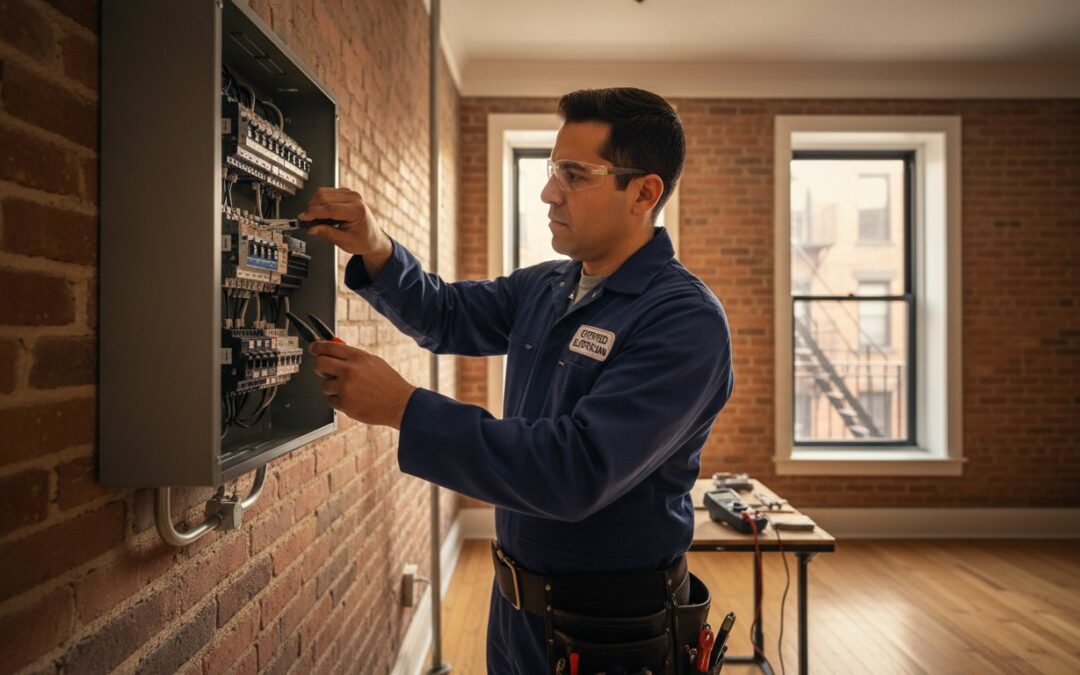
On a humid evening in July 2023, an East Village resident discovered that running a toaster and a portable AC unit simultaneously in their 1910 tenement apartment was enough to trip the circuit breaker for the third time in a single week. If you live in a historic pre-war building, you likely recognize the frustration of limited outlets and flickering lights. You deserve a home that supports modern appliances without the constant fear of an electrical fire or a sudden blackout. Working with an experienced east village licensed electrician ensures your property meets current NYC Electrical Code standards while protecting your family from the hazards of aging wiring.
We understand that NYC Department of Buildings (DOB) permit requirements often feel overwhelming for property owners. This guide provides a clear path to troubleshooting common electrical failures and securing the necessary paperwork for safe, legal repairs. You’ll learn how to identify code-compliant solutions that prevent costly violations and ensure your building passes inspection the first time. From upgrading old fuse boxes to installing dedicated lines, we’ll explain how to achieve reliable power and total peace of mind in your historic New York home.
Key Takeaways
- Identify the unique risks associated with East Village pre-war infrastructure, from outdated knob-and-tube wiring to ungrounded outlets.
- Understand why hiring an east village licensed electrician is legally required to pull NYC DOB permits and ensure your home meets modern safety standards.
- Learn a step-by-step method for safely troubleshooting apartment power failures and inspecting your circuit breaker panel.
- Discover which renovation projects require a Limited Alteration Application (LAA) or a coordinated Con Edison service upgrade.
- Find out how local expertise in the NYC Electrical Code helps you avoid expensive violations and ensures your project passes inspection the first time.
Common Electrical Challenges in East Village Pre-War Buildings
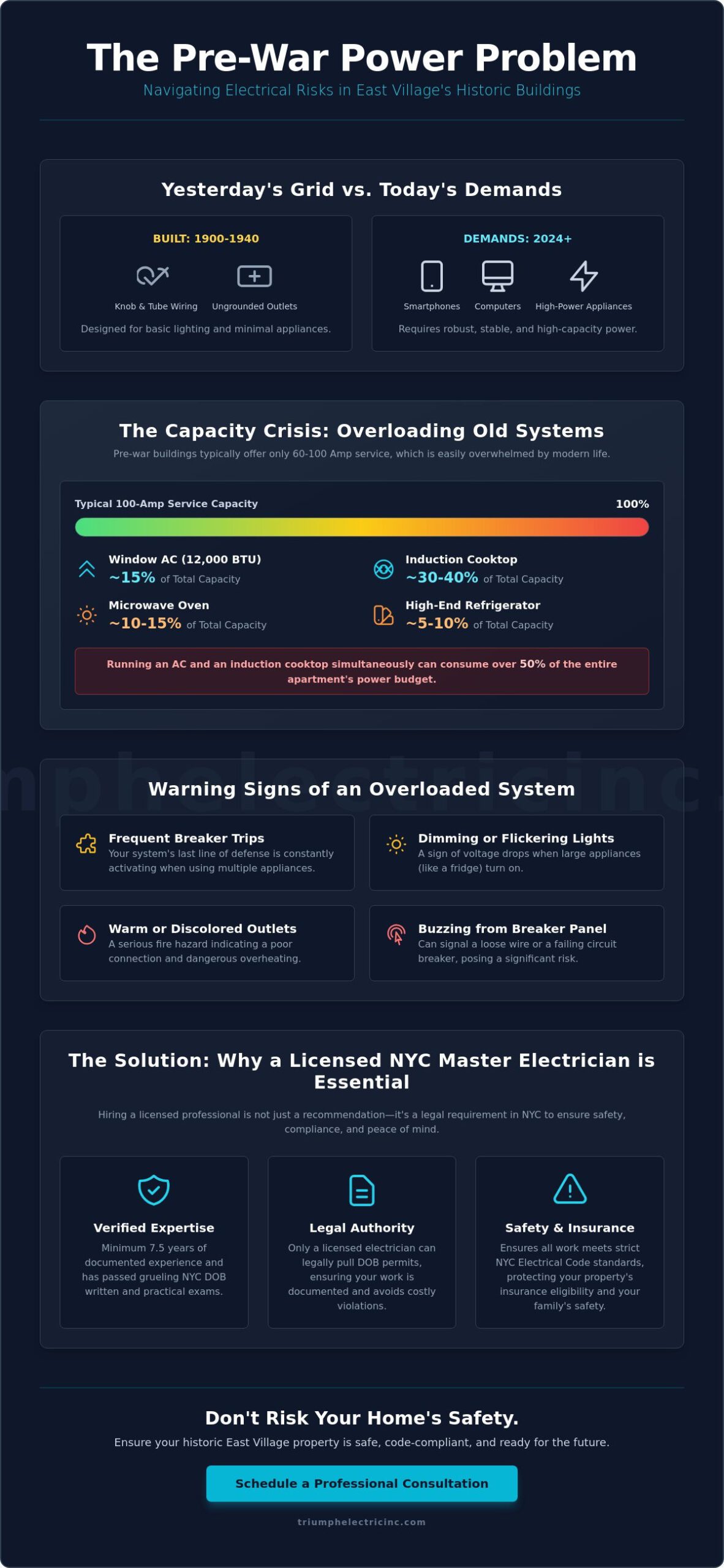
East Village pre-war buildings offer historic character, but their electrical systems often rely on infrastructure installed between 1900 and 1940. These aging grids weren’t designed for the digital age. Many apartments still feature ungrounded two-prong outlets or dangerous knob-and-tube remnants hidden behind plaster walls. When you hire an east village licensed electrician, the first task involves identifying these obsolete components that no longer meet current NYC Electrical Code standards.
A significant issue involves the “handyman” patches found in high-density Manhattan rentals. In a building with 20 or 30 units sharing floorplans, an illegal splice or an overloaded junction box in one apartment creates a fire hazard for the entire structure. Professional contractors bring an extensive understanding of the electrical safety code to ensure every repair is documented and legal. This precision prevents the common safety violations that plague unpermitted work and protects the building’s insurance eligibility.
The Burden of Modern Technology on Old Grids
Original East Village wiring typically provides 60-amp or 100-amp service, which is insufficient for 2024 standards. A single 12,000 BTU window air conditioner can consume 15 percent of an apartment’s total capacity. When you add high-end kitchens with induction cooktops and professional-grade refrigerators, the system reaches its breaking point. In NYC apartment living, electrical load refers to the total power demand required by all active appliances and fixtures compared to the maximum capacity of the circuit breaker panel.
Signs your apartment is reaching its maximum capacity include:
- Frequent tripping of circuit breakers when using a microwave and AC simultaneously.
- Dimming or flickering lights when a refrigerator compressor kicks on.
- Outlets that feel warm to the touch or show visible discoloration.
- A persistent buzzing sound coming from the breaker panel.
Safety Risks Specific to High-Density East Village Living
Safety risks are amplified in the East Village due to the interconnected nature of pre-war floorplans. Fire can spread rapidly through shared joists and wall cavities if a short circuit occurs. An east village licensed electrician often discovers building-wide neutral issues when a tenant reports flickering lights; this is frequently a sign of a loose connection at the main service entrance or a failing transformer.
Regular inspections of aging electrical panels are vital for high-density safety. Panels over 40 years old, such as those from defunct manufacturers like Federal Pacific, have high failure rates and may not trip during a surge. This failure to trip is a leading cause of electrical fires in Manhattan. Ensuring your panel is code-compliant and properly grounded is the only way to maintain a safe environment in such a densely populated neighborhood.
The NYC Master Electrician License: Why It Matters for Your Safety
Hiring an east village licensed electrician is the only way to guarantee that your property meets the strict safety standards of New York City. An NYC Master Electrician isn’t just a technician; they’re a highly vetted professional who has completed at least 7.5 years of documented experience in the trade. This certification process includes a grueling written and practical exam administered by the Department of Buildings (DOB). It’s a level of expertise that ensures every connection, circuit, and panel upgrade aligns with the current NYC Electrical Code.
The legal distinction is vital for East Village residents living in historic or high-density buildings. Only a licensed professional has the legal authority to pull DOB permits. Without these permits, your electrical work doesn’t exist in the city’s official records. This lack of documentation creates massive headaches when you try to sell or refinance your property. You can easily verify a license through the NYC DOB portal to ensure your contractor is legitimate. Consulting electrical safety resources can help you understand why these regulations are so strict in urban environments where a single electrical fire can threaten an entire block.
Master Electrician vs. General Contractor
It’s a common misconception that a general contractor (GC) can handle your wiring. While a GC manages the overall project, they aren’t legally allowed to perform electrical installations. Professional electrical firms use a “License Signer” who carries the Master Electrician credential and assumes total liability for the work. This specialist understands the specific quirks of NYC infrastructure, from old BX cable to modern conduit requirements. They ensure the job is done right, maintaining the brand’s commitment to passing inspection the first time.
The True Cost of Hiring Unlicensed Labor
Choosing unlicensed labor might save money today, but it often leads to expensive NYC electrical violation removal costs down the road. Unlicensed work is a red flag for insurance companies. If a fire starts because of a non-permitted installation, your carrier may deny the claim entirely. Beyond the financial risk, poor wiring is a direct threat to your family’s safety. When you hire a qualified east village licensed electrician, you’re investing in long-term security and property value. If you have concerns about existing work in your home, you should consult with a licensed professional to verify your system’s integrity.
Step-by-Step: Safely Troubleshooting Apartment Power Failures
Electrical failures in the East Village often stem from the unique demands placed on aging infrastructure. Before you call for professional help, follow these logical steps to determine if the issue is a simple fix or a serious hazard. First, check the scope of the outage. Look out the window to see if streetlights or neighboring buildings are dark. If the entire block is out, the problem lies with the utility grid. If it’s just your apartment, the issue is internal.
Locate your circuit breaker panel, which is typically found behind a metal door in the kitchen, hallway, or near the entrance. In many East Village units built before 1940, you might encounter an old fuse box instead of a modern breaker panel. Safety is the priority here. Don’t touch the panel if you’re standing in water or if your hands are wet. Inspect the switches to see if any have moved to the “off” position or are stuck in the middle. For older units, look for a blown fuse with a visible break in the metal filament or a charred glass top.
- The Unplug and Reset Method: If a specific circuit keeps tripping, unplug every device on that line. Reset the breaker by flipping it fully to “off” and then back to “on.”
- Isolate the Fault: Plug devices back in one by one. If the power cuts again when you start the microwave or window AC unit, you’ve identified an overloaded circuit.
- The Hard Stop: If the breaker trips immediately without any appliances plugged in, you have a direct short circuit. Stop troubleshooting and contact an east village licensed electrician to prevent a potential fire.
Identifying the Source of the Problem
Distinguishing between a localized short and a building-wide surge requires a methodical approach. You can use a basic plug-in circuit tester, available at most hardware stores, to check if an outlet is grounded or if the wiring is reversed. In many Manhattan apartments, you’ll encounter “half-hot” outlets where the top plug is controlled by a wall switch while the bottom remains energized at all times. This is a standard design feature, not a malfunction, intended for floor lamps in rooms without overhead lighting.
When Troubleshooting Becomes an Emergency
Certain symptoms indicate a violation of the NYC Electrical Code that requires immediate intervention. If you smell burning plastic, see sparks, or hear a persistent buzzing sound coming from your walls, the situation is critical. These signs suggest arcing, which can reach temperatures high enough to ignite internal building materials. If your breaker panel feels hot to the touch, it’s a sign of a failing bus bar or a loose connection that needs professional repair.
In an emergency, you must know how to cut the power. In modern buildings, the main disconnect is at the top of your panel. In older pre-war walk-ups, the main shut-off may be located in a shared utility closet or the basement. If you can’t safely reach the main switch or if the equipment looks corroded, don’t force it. Call an east village licensed electrician who understands the specific risks associated with New York’s legacy electrical systems. Professional contractors ensure all repairs meet current DOB standards, protecting your safety and your lease.
When Your East Village Project Requires NYC DOB Permits or Con Edison
Large-scale renovations in Manhattan’s historic districts require more than just technical skill. They demand strict adherence to the NYC Electrical Code. If your project involves moving a meter, upgrading your panel, or installing new heavy-duty circuits, you must secure the proper permits. An east village licensed electrician ensures these legal requirements are met before the first wire is stripped. Professionals handle the filings so you don’t have to deal with city bureaucracy.
Most residential and commercial improvements fall under a Limited Alteration Application (LAA). This specific permit covers work that doesn’t require a full architectural plan review. It typically applies to projects where the cost is under $25,000 and involves no structural changes. Skipping this step is a significant risk. It leads to heavy fines and major delays during future property sales or insurance claims.
Navigating the NYC Department of Buildings (DOB)
Manhattan’s regulatory environment is notoriously dense. Permit approval timelines vary based on current backlog, but having a Master Electrician who utilizes “self-certification” can save weeks of waiting. This process allows a qualified professional to certify that the work complies with all safety standards. It bypasses the need for a preliminary DOB inspection in many instances. Failure to file correctly often results in a stop-work order. These orders halt all construction on your property immediately and stay on the public record until resolved.
Working with Con Edison in Lower Manhattan
Increasing your building’s amperage requires a formal “Work Request” through Con Edison’s Project Management portal. This is a critical step for a Con Edison service upgrade. Your east village licensed electrician must coordinate directly with utility technicians to establish new service points and install approved meter pans. This ensures the grid can handle your increased load without risking a local blackout.
Safe panel replacements often require a scheduled power shut-off. We manage the logistics with Con Edison to ensure the outage is brief and legal. In the East Village, exterior service equipment must also meet specific utility standards for accessibility and weatherproofing. Once the physical work is finished, we secure the Certificate of Electrical Inspection. This document is your proof of safety and compliance. For professional assistance with your next project, contact Triumph Electrical Contracting today.
Triumph Electrical: Your Partner for Code-Compliant East Village Repairs
Triumph Electrical Contracting operates as a “Straight Shooter” in an industry where clarity is often hard to find. We bring a disciplined, no-nonsense approach to the specific electrical challenges found in Lower Manhattan. The East Village contains a dense mix of century-old tenements and high-end modern developments, each requiring a specialized touch. Hiring an east village licensed electrician from our team ensures that your property adheres to the strict NYC Electrical Code without the stress of guesswork. We focus on precision and legitimacy, ensuring every repair or installation is performed to NEC standards.
Our local expertise saves property owners significant money by avoiding the “trial and error” methods of less experienced contractors. We understand the specific requirements of the Department of Buildings (DOB) and the Bureau of Electrical Control. This knowledge allows us to streamline projects and secure necessary permits quickly. We offer 24/7 emergency response for East Village residents and businesses. If a circuit fails in a restaurant during the dinner rush or a residential panel sparks at midnight, our technicians are ready to deploy. The Triumph promise is simple: we deliver professional, legal, and safe results for every zip code in the city.
New York’s Brightest: Our Commitment to the Community
We’ve spent years working inside the iconic residential and commercial spaces that define the East Village. Our history includes everything from upgrading power systems in pre-war apartments to installing complex lighting for local galleries. We specialize in violation removals and code compliance projects. If you’ve received an ECB or DOB violation notice, we handle the remediation and the paperwork to clear your record. Our “New York’s Brightest” team provides upfront pricing with no hidden NYC surcharges. You’ll receive a clear, honest estimate before any work begins, maintaining the integrity of your budget and your property.
- Professional violation removal and DOB filing services.
- Comprehensive load calculations for modern appliance upgrades.
- Dedicated support for both small-scale residential repairs and large commercial build-outs.
- Transparent communication with no hidden fees or unexpected costs.
Schedule Your East Village Electrical Consultation
Preparing for a diagnostic visit from our licensed team is straightforward. We recommend identifying all problem areas, such as specific outlets that don’t work or lights that flicker, before we arrive. During a comprehensive electrical safety audit, we inspect your panel, grounding systems, and wiring integrity. We look for signs of thermal damage or outdated components that could pose a fire risk. Our goal is to ensure your system passes inspection the first time, every time. Don’t leave your safety to chance when expert help is a phone call away.
Contact Triumph Electrical Contracting for expert service in the East Village today to secure your property and ensure your electrical system is fully code-compliant.
Secure Your East Village Property with Code-Compliant Electrical Solutions
Navigating the electrical complexities of East Village pre-war buildings requires a specialist who understands the specific demands of the NYC Department of Buildings. From resolving outdated wiring issues to handling 24/7 emergency power failures, the safety of your property depends on professional expertise. Triumph Electrical brings the authority of NYC Licensed Master Electrician #12345 to every project. We focus on removing DOB violations and ensuring all work meets current NEC standards. This dedication to precision helps you pass inspections the first time and avoids the legal headaches of unpermitted work.
Don’t risk your safety or your property’s value with unlicensed repairs. Choosing an east village licensed electrician means you’re partnering with a team that values transparency and technical discipline. We manage the entire process, including Con Edison coordination and permit filings, so you can focus on your daily life. It’s our job to provide the peace of mind that comes with a secure, reliable electrical system. New York’s Brightest are ready to handle your toughest challenges with the no-nonsense professionalism you deserve.
Get a Professional Quote from East Village’s Licensed Electricians
Let’s make your building safe and efficient today.
Frequently Asked Questions
How do I check if an electrician is actually licensed in NYC?
You must verify credentials through the NYC Department of Buildings (DOB) online portal. Enter the business name or license number into the Buildings Information System to confirm an active status. Every east village licensed electrician is required to carry a physical license card issued by the DOB. You should also verify that the contractor maintains the mandatory $1 million general liability insurance policy to protect your property.
Do I really need a permit to replace a few outlets in my East Village apartment?
No, the NYC Electrical Code classifies the replacement of existing receptacles or switches as minor work that doesn’t require a permit. However, adding new outlet locations or moving existing boxes requires a formal permit filing with the city. All work must still meet the 2011 NYC Electrical Code standards to ensure safety. This prevents future insurance claim denials and ensures your home remains safe for all occupants.
What is the difference between a Master Electrician and a journeyman?
A Master Electrician is the only professional authorized by the NYC DOB to pull permits and sign off on completed work. These individuals have at least 7.5 years of documented experience and have passed a rigorous 2 part examination. A journeyman is a skilled technician who has completed an apprenticeship but must work under the direct supervision of a Master Electrician’s license. They cannot operate an independent electrical business in New York.
Why do the lights flicker when my neighbor turns on their air conditioner?
This flickering happens because shared service lines in older Manhattan buildings often lack the capacity for modern electrical loads. A 5 percent voltage drop is common when a large compressor starts up on a shared circuit. If the flickering persists for more than 2 seconds, it indicates a loose neutral wire or an overloaded transformer. You need an immediate professional assessment to prevent fire hazards and protect your sensitive electronic equipment.
How much does a typical electrical inspection cost in the East Village?
Inspection fees depend on the project scope, but the NYC Department of Buildings uses a standard fee schedule for all official filings. A residential electrical permit application fee starts at $15 for small jobs according to the DOB website. Private safety inspections are separate and vary based on the 1,000 square foot average of most local apartments. These professional evaluations ensure your wiring is code-compliant and safe for daily use.
Can I upgrade my own circuit breaker panel if I follow a YouTube guide?
No, performing your own panel upgrade is illegal under NYC Administrative Code 27-3017. Only a licensed professional can perform this work and file the necessary paperwork with the DOB. Attempting a DIY upgrade voids your fire insurance policy and risks a Class 1 Immediately Hazardous violation. These violations stay on the property title and can prevent you from selling or refinancing your home until a professional corrects the work.
What should I do if I receive an NYC DOB electrical violation notice?
You must hire an east village licensed electrician to correct the specific safety issue described in the notice. Once the repairs are finished, the electrician files a Certificate of Electrical Inspection to clear the record. Our team specializes in passing inspection the first time to resolve these legal hurdles. This process ensures your property remains code-compliant and avoids the compounding fines associated with unresolved DOB violations that appear on public records.
How long does a Con Edison service upgrade usually take in Manhattan?
A standard service upgrade typically takes 3 to 6 months from the initial load letter submission to the final meter installation. This timeline includes the 4 to 8 weeks Con Edison requires for their internal engineering review and the scheduling of field inspections. As New York’s Brightest, we manage the entire coordination process to keep your project moving. We handle the bureaucracy so your building gets the power it needs without unnecessary delays.